
As part of the national ANR Be Creative project, action research is being conducted to encourage organic fruit production in the Pilat area. The aim is to reduce pesticide use in collaboration with local stakeholders and for their benefit. Significant barriers to phasing out pesticide use in fruit growing have been identified in the marketing of fruit. The project aims to support a diverse group of stakeholders from the private, public and voluntary sectors to devise solutions that will promote organic produce in the Pilat region more effectively.
Funding bodies: Priority Research Programme ‘Cultivating and Protecting Differently’, Ministry of Higher Education, Research and Innovation and General Secretariat for Investment (PPR CPA – 20-PCPA-0001)
The Be Creative action research project (2021–2027) is being carried out across ten regions in France, with the aim of developing solutions to phase out the use of pesticides at a regional level: understanding the factors that influence their use by producing assessments that inform the design of solutions, experimenting with ways to support local stakeholders in developing the identified solutions, and evaluating their impacts.
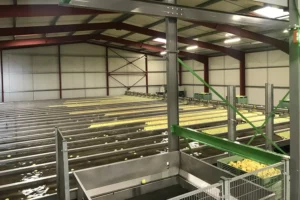
The Pilat Regional Park is one of the areas where Be Creative is being implemented. An initial assessment was carried out to examine the barriers and drivers for reducing pesticide use in the region’s fruit growing and viticulture sectors. In fruit growing, the study highlighted significant barriers linked to the marketing of produce, which have an impact on the chosen cropping systems and practices within the plots: Producers have specialised in apple production and rely on pesticides to ensure large volumes of ‘flawless’ fruit that meet standards, in order to generate an income, against a backdrop of competition from cheaper imported fruit and investments that need to be recouped. Uncertainties linked to climate hazards and disruptions, as well as the transfer of farms, further complicate the possibilities for change within the plots.
Production and marketing systems have been organised and refined to cater to specific markets, making it particularly difficult to transform these systems (a phenomenon known as socio-technical lock-in). This is further complicated by the long-term nature of arboriculture, where changes are planned over a long period of time (such as diversifying varieties or species, or altering the spatial layout of orchards). Furthermore, the economic crisis facing organic farming, particularly within long supply chains, is hindering the development of this market despite its pesticide-free production capabilities. Organic producers who sell directly to consumers face complex and time-consuming sales logistics and are often economically vulnerable, despite growing demand.
In light of this, the Be Creative Pilat team has developed two initiatives. The first is a collaborative project bringing together stakeholders in the fruit sector (from the private, public, and voluntary sectors) to promote organic fruit production*, ensure fair remuneration and good working conditions for farmers, promote biodiversity and preserve natural resources, and contribute to food security in the Pilat region and surrounding areas. A parallel initiative led by a sub-team, CARAB (Design and Support for Pest Control through Biodiversity), aims to create a landscape conducive to functional biodiversity and biological pest control. This project is described in more detail on a dedicated page.
*The aim is to promote production using few or no synthetic plant protection products. Our goal is to collaborate with all stakeholders in the sector, supporting each one based on their current stage and taking into account their respective capabilities and limitations, while identifying and leveraging all possible synergies within the collective of stakeholders involved in the initiative.
Methodological approaches and results
The project employs a participatory, multi-stakeholder action research approach with a transformative focus. This approach has evolved alongside the project, guided by an iterative process of reflective analysis of objectives, actions and approaches, to inform the planning of subsequent steps. The approach is underpinned by a hybrid methodology that combines territorial dialogue (Barret, 2003) and systems thinking (Sevaldson, 2022).
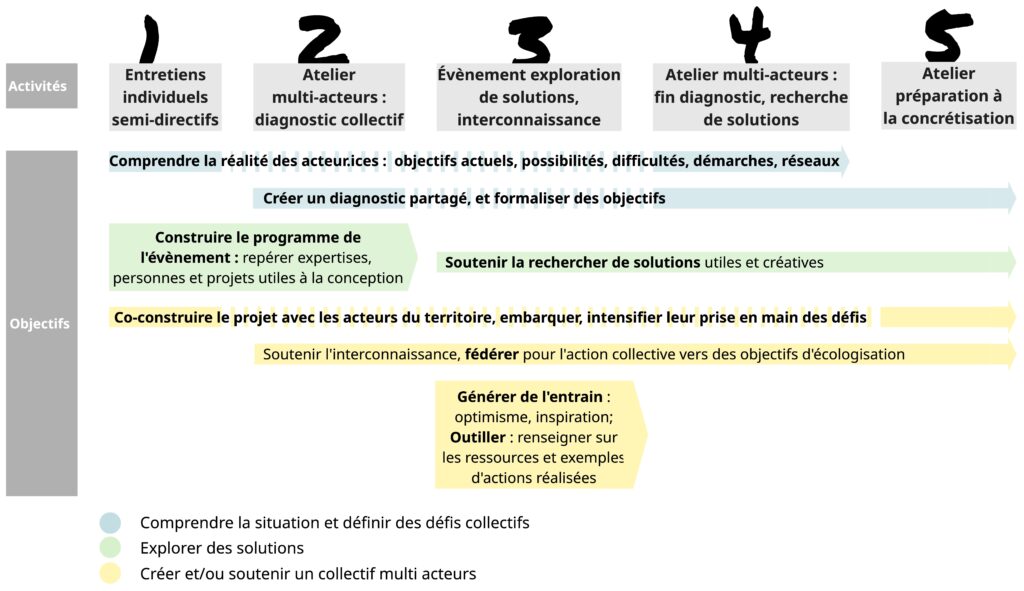
- An initial socio-technical analysis (the results of which are described above) guided the rest of the project by describing factors (technical, political, organisational and psychosocial) that explain pesticide use, and by identifying networks of stakeholders involved. In particular, the study emphasised the importance of marketing produce to support the development of pesticide-free agricultural systems.
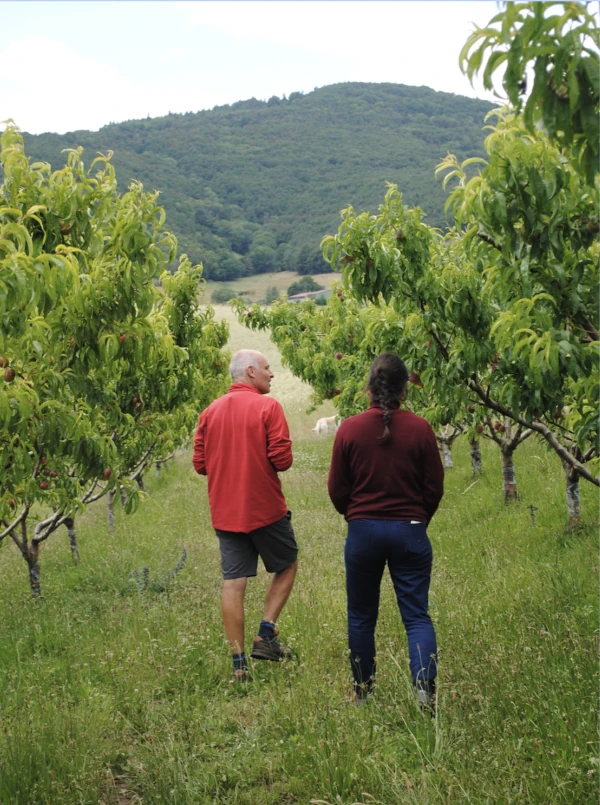
- A serie of semi-structured interviews with economic, public, and community stakeholders further fleshed out the analysis of barriers and drivers for the transformation, sourcing, distribution, and/or sale of local and/or organic fruit produce. These interviews also raised awareness of the project and enabled it to be refined in consultation with stakeholders.
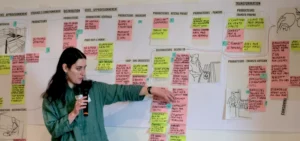
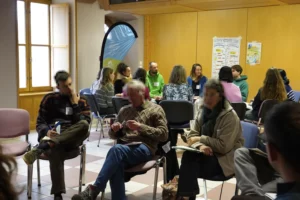
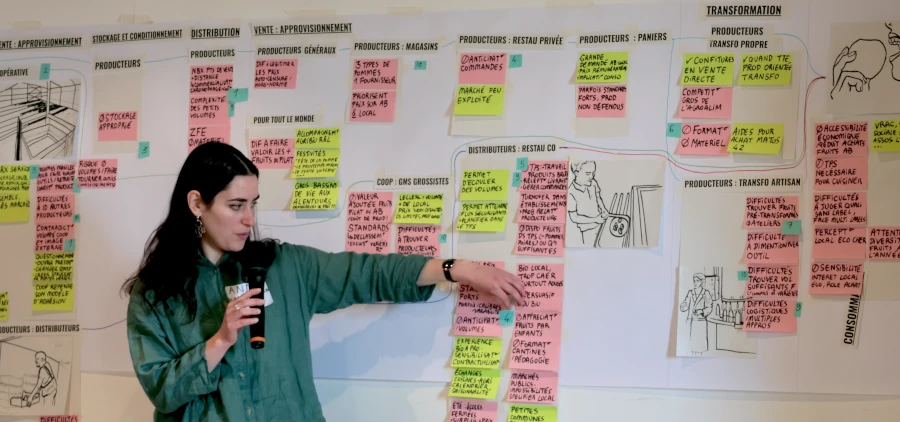
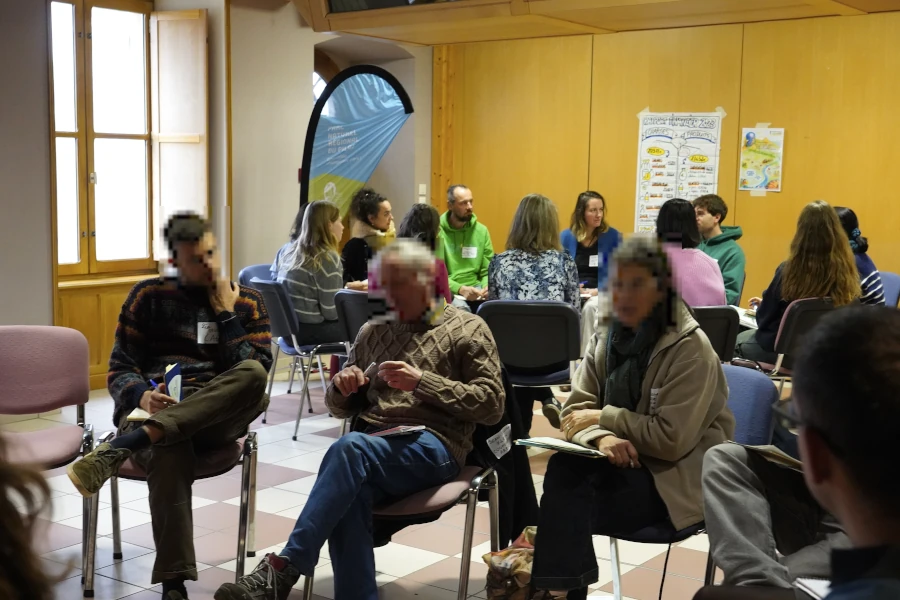
- Several half-day, multi-stakeholder workshops were organised to develop a collective overview of the challenges and opportunities involved in promoting organic fruit production at every stage of the value chain. This overview was supplemented by data gathered during individual interviews, which were then put back up for discussion. The overview enabled 11 challenges to be identified and addressed, and potential solutions to be explored.
- A showcase event featuring inspiring local initiatives and resources was held to stimulate creativity, promote mutual understanding, instil optimism and provide tools for the design process.
A serie of workshops were held with various local stakeholders involved in supporting the sector. The aim was to launch a phase that would put the solutions explored as part of the action research project into practice. This would involve forming partnerships with and between these stakeholders, as well as encouraging collective reflection on the involvement of difficult-to-mobilise economic actors and the governance of the sector. A visual representation tool was designed to facilitate discussions and encourage exploration of ways to take collective action. Rather than taking their place, the project’s research team should support local stakeholders in implementing new projects to support the Pilat’s organic fruit sector.
ISARA project team
Florian Celette, Hélène Brives, Lucy Zwigard
Project partner team
Anna Hirson-Sagalyn (INRAE), Marion Casagrande (INRAE), Muriel Valantin-Morison (INRAE), Aliénor Morvan (ENSCI), Caroline Champailler (PNR du Pilat)
Publications
Anna Hirson-Sagalyn, Lucy Zwigard, Hélène Brives, Maude Quinio, Caroline Champailler, Florian Celette. Une arboriculture sans produits phytosanitaires de synthèse dans le Pilat, verrouillages et perspectives de transformation. Innovations Agronomiques, 2024, 93, pp.93-107. ⟨10.17180/ciag-2024-vol93-art08⟩. ⟨hal-04583002⟩
Anna Hirson-Sagalyn, Caroline Champailler, Hélène Brives, Florian Celette, Alienor Morvan, Muriel Valantin-Morison et Marion Casagrande. Empowering systemic change at a territory scale: a collective learning experiment with stakeholders along the agrifood chain in the Pilat, France. 8th International Farming System Design Conference, Aug 2025, Palaiseau, France. 4 p. ⟨hal-05261877⟩
Anna Hirson-Sagalyn, Lucy Zwigard. Towards pesticide free agriculture in the Pilat Rhodanien, France. Norwegian University of Life Sciences. 2022. ⟨hal-04715913⟩
Bibliography
Phillippe Barret. Guide pratique du dialogue territorial. Concertation et médiation pour l’environnement et le développement local. Fondation de France. Collection Pratiques, 2003.
Birger Sevaldson. Designing Complexity, The Methodology and Practice of Systems Oriented Design. Common Ground. The Constructed Environment, 2022.