ALL Facts project applies a transdisciplinary approach and addresses the problems and challenges of agri-food systems in Europe. It is based on existing and new agroecology living labs (ALL) with a diversity of stakeholders involved. The project focuses on the diversification of farming and food systems through agroecological practices, evaluating their impact on ecosystem services at the landscape level. It also evaluates and develops governance approaches and policies for the sustainable upscaling of these practices to the territorial level.

Funders : Horizon Europe – the Framework Programme for Research and Innovation (2021-2027) / international call “2024 1st Co-funded Call Agroecology” issued by the entities participating in the Agroecology Partnership.

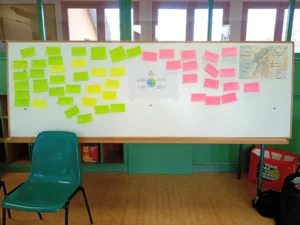
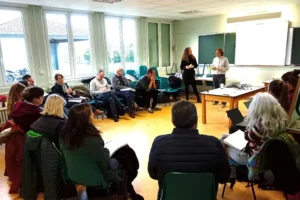
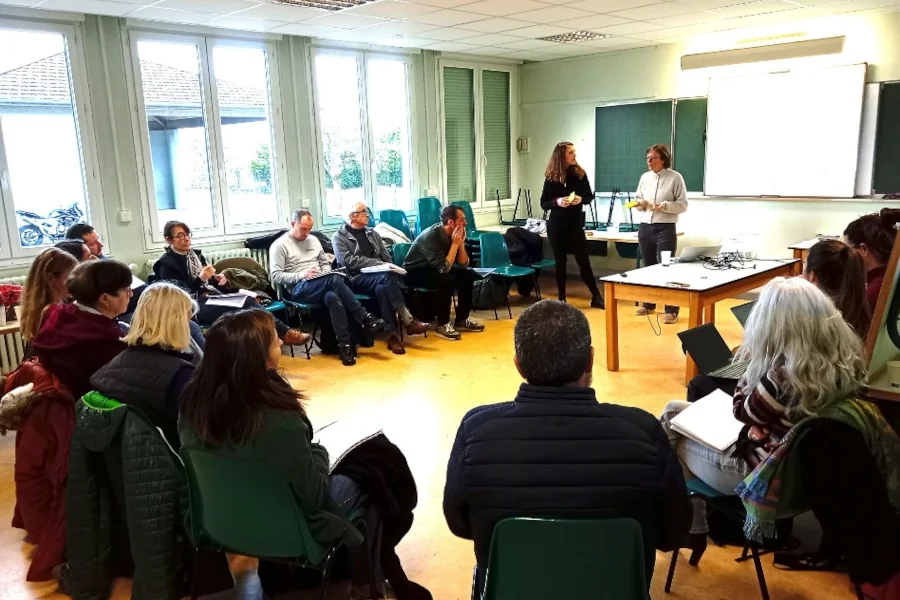
The ALL Facts project is a European research project dedicated to monitoring and supporting agroecological transition experiments through action research. The project’s research questions focus on understanding changes in practices, the associated ecosystem services, and the public policies and supply chain organizations that enable these transitions. They also aim to understand how these experiments are deployed in relation to issues of social justice and food democracy: experiment trajectories, the link between research and action, citizen mobilization, etc. Each agroecological living lab brings together researchers and actors/practitioners with a dual perspective: co-constructing scientific and operational knowledge about the processes within frameworks that integrate practitioners/actors and researchers.
Project objectives
The project aims to support a network of 11 ALLs already existing (3 Italian, 1 Spanish, 1 German, 1 French, 3 Dutch) or emerging (1 French, 1 Romanian) at territorial levels in 6 different EU countries and 5 pedoclimatics zones and promote upscaling of agroecology and accelerate the agroecology transition.
This will be achieved by performing an integrated assessment of the socio-economic impacts and ecosystem services of the best-suited agroecology practices adapted to the landscape/territorial level for agrifood system diversification with 2 methodologies:
- APES Framework (Agroecological Practices to assess Ecosystem Services) and participatory mapping methodology at territorial level; https://www.frontiersin.org/journals/agronomy/articles/10.3389/fagro.2025.1648022/full
- Me4ALL Framework (Monitoring and Evaluation for ALLs). Identify the most promising governance processes and multi-level policies to support an upscaling of ALLs to the landscape level and beyond. https://www.tandfonline.com/doi/full/10.1080/21683565.2025.2477215#abstract
Finally the project will co-create solutions by relying on a participatory approach for re-designing agroecosystems at the territorial level. By integrating ecosystem services, socio-political and economic aspects. This will enable the identification of transition paths that are specific to each territory, thereby shaping exemplary territories for the scaling up of co-learning and imitation across Europe.
With VetAgro Sup, the territory studied by the team is Saint-Marcellin Royans Vercors, as shown on the map below:
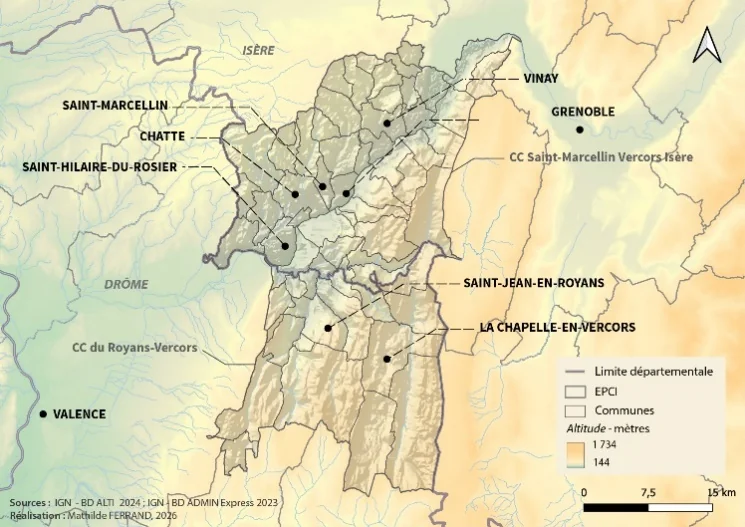
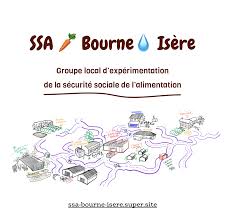
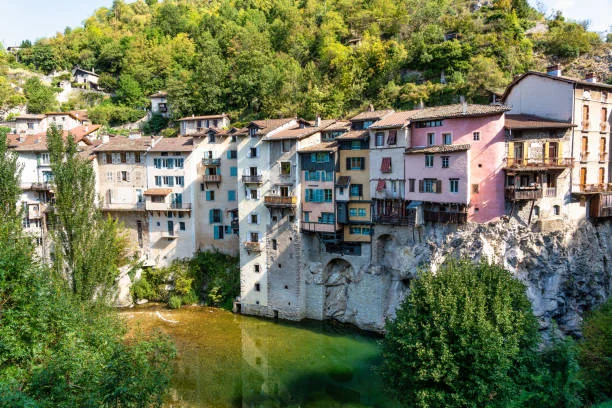
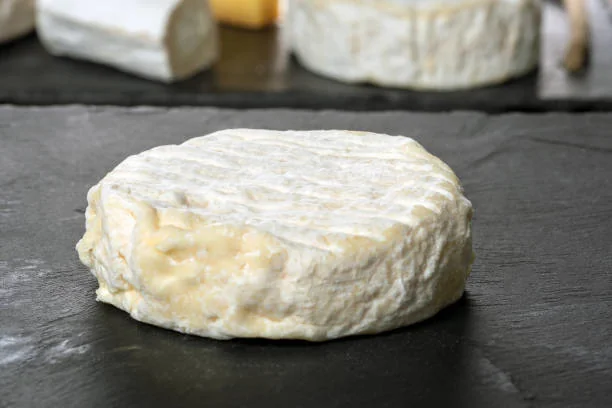
The Living Lab is organized at the level of the Royans-Vercors and St Marcellin-Vercors inter-municipal communities, at the border between the Isère and Drôme departments. These rural areas, located on the foothills of the Vercors mountains, lie between the two urban areas of Valence and Grenoble. Agriculture is characterized by the predominance of large-scale crops and walnut cultivation in the valleys, along with various livestock farming systems (cattle, sheep). Several important sectors exist around recognized products: PDO cheeses (Saint-Félicien, Saint-Marcelin), and PDO walnuts and walnut oil from Isère. Local supply chains are also developing, through short or local distribution channels. However, several challenges are emerging: diversification of production and development of market gardening, evolution of agricultural practices in the area, and issues of food accessibility. In this region, experiments and public policies are underway to structure local food systems that integrate issues of food accessibility, shifts in practices towards agroecology, and fair compensation for farmers. An initiative led by a citizens’ collective, bringing together various associations and social actors in the region, is promoting a food security system with a strong commitment to food democracy. Local authorities at different levels are also supporting this dynamic through various mechanisms: local food projects, and the promotion of local food systems (e.g., the ISHERE label, supported by the Isère department). Together with the actors, we would like to think about:
- How can we build food systems that are fair for producers and accessible to everyone?
- How is a food democracy trajectory being developed in a rural, mid-mountain region, and what role can agroecology play in this food democracy?
- What agroecological practices are being implemented in the region, and what is their environmental impact?
- What are the roles of public actors in supporting a citizen-led experiment in food democracy?
This territory, corresponding to two local authorities, is particularly dynamic in terms of the diversity of actors and initiatives. It is a fairly diverse territory in terms of cultures and labeled products in which agriculture occupies an important place in the territory’s economy. The issue of food autonomy and resilience has already been questioned several times by various actors.
Our objective with this living lab is to assess the situation in the territory, identify all existing initiatives, propose a strategy for their development in order to promote their resilience, and consider territorial mediation with all stakeholders.
Materials and methods
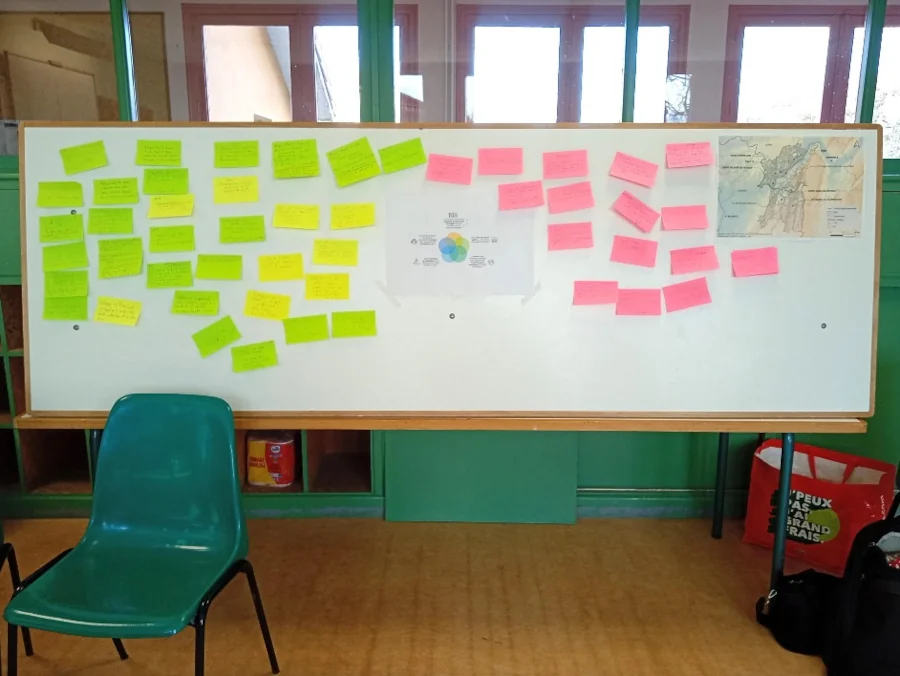
All agroecological living labs will follow the same research protocol, although adaptations are possible depending on the specific challenges of each one. Various specific research is being conducted to gain a better understanding of the living lab and to collectively discuss the results. This research focuses in particular on agroecological practices, agricultural and food public policies, how quality supply chains function in the territory and the form of food democracy that is implemented. Participatory workshops are planned, as well as the implementation of tools to bring this living lab to life.
Timeline
The project began in May 2025 and will end in April 2028. Various key moments are planned to work by living lab but also in a cross-cutting way between living labs. During 2026, two workshops per living lab will be organized to conduct shared assessments and define the resources needed to determine how to collect data. 2027 will be a pivotal year, marking the analysis and dissemination of results within each agroecological living lab. 2028 will be primarily dedicated to sharing results between living labs.
An agroecological living lab can be defined as a practice-oriented organization that facilitates the creation of concrete spaces fostering collaborative innovation. In short, this implies that a group, created at different scales and for different initiatives, leads this organization to make the best use of the various types of knowledge and skills (practical, scientific, entrepreneurial, organizational, etc.) coming, for example, from farmers, advisors, researchers, and businesses.
ISARA project team
Chazoule Carole, Ferrer Aurélie, Perrin Jacques-Aristide, Vandenbroucke Perrine, Wezel Alexander
Project partners
- Università degli Studi di Scienze Gastronomiche (UNISG)
- Consiglio per la ricerca in agricoltura e l’analisi dell’economia agraria Centro di ricerca Agricoltura e Ambiente (CREA)
- VEGEPOLYS VALLEY Innovation (VV)
- Chambre d’Agriculture de Région Pays de la Loire (Chambagri)
- Libera Università di Bolzano (UNIBZ)
- University of Kassel, Internationale Agrarpolitik und Umweltgovernance Department (UNIKASSEL)
- Centro de Investigaciones Científicas y Tecnológicas de Extremadura (CICYTEX)
- University of Coimbra Department of Life Sciences (UC)
- VetAgro Sup (VetAgro)
- Fondazione Italiana per la Ricerca in Agricoltura Biologica e Biodinamica (FIRAB)
- Asociația Acces la Pǎmânt pentru Agroecologie (ALPA)
- Stichting Wageningen Research, research institute Wageningen Plant Research (WR)
- Wageningen University, Department of Social Sciences, Rural Sociology (WU)
- Vereinigung Ökologischer Landbau in Hessen e.V. Praxisforschungsnetzwerk Hessen (VOL)
- Entretantos Foundation (EF)
Funders
All partners have submitted a proposal for the Project to the AGROECOLOGY Partnership, under the 1st AGROECOLOGY PARTNERSHIP co-funded call (Grant Agreement n. 101132349) as part of Horizon Europe – the Framework Programme for Research and Innovation (2021-2027). The ALL Facts project, coordinated by the University of Gastronomic Sciences, was among the winners of the international call “2024 1st Co-funded Call Agroecology” issued by the entities participating in the Agroecology Partnership for the financing of research, development and innovation projects aimed at promoting the agroecological approach at company and territorial level.