
The overall objective of the CLEAR project is to contribute to the transition of European/UK agriculture towards increased agrobiodiversity and the support of key agroecosystem services.
Funders : SusCrop, ERA-NET, FACCEJPI
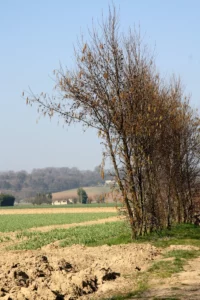


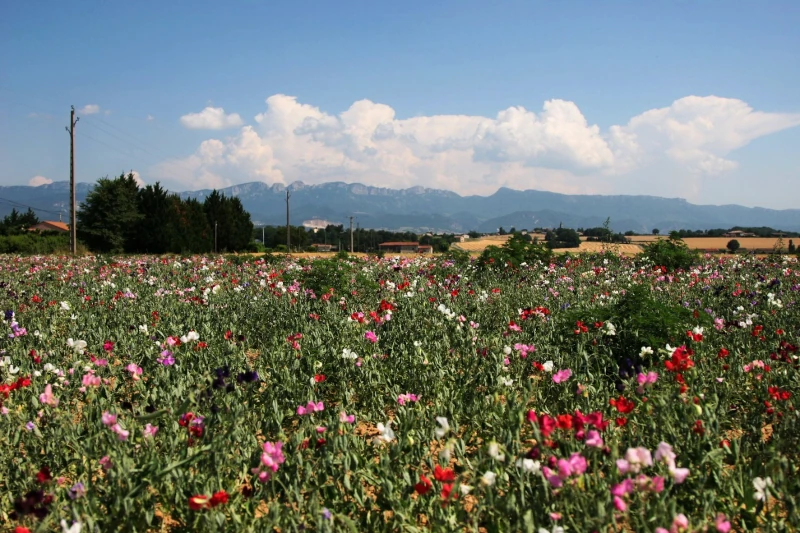
Current agricultural systems are characterized by intensification, simplification and degradation, consequently threatening the sustainability and resilience of our food production systems. Future agricultural landscapes need to be multifunctional and resilient, delivering a wide range of agroecosystem services in addition to food production. When efforts are made to promote agrobiodiversity, goals related to food production, biodiversity and climate change are addressed simultaneously.
Project objectives
The overall objective of the CLEAR project is to contribute to the transition of European/UK agriculture towards increased agrobiodiversity and the support of key agroecosystem services. Our assessment will focus on relevance for stakeholders, the feasibility of monitoring and evaluation processes, and the policy support of multifunctionality and resilience within agricultural landscapes across different contexts.
The project aims to:
- Identify indicators to monitor agrobiodiversity and related agroecosystem services and increase the understanding of scientific and practical requirements for adoption.
- Identify practices that enhance agrobiodiversity across EU/UK contexts, considering natural and societal requirements for landscape-scale upscaling.
- Propose effective agri-environmental measures to incentivize uptake of practices enhancing agrobiodiversity at farm and landscape level, considering opportunities and limitations for collaborative and result-based approaches across the EU/UK.
- Develop a data- and stakeholder-based methodological framework to facilitate spatial targeting and collaborative planning to enhance landscape multifunctionality.
Agrobiodiversity has a clear role to play in reconciling goals related to food production, biodiversity and climate change. The CLEAR project makes a contribution by identifying agrobiodiversity practices, indicators, and policy instruments via a participatory and integrated approach.
Materials and methods
CLEAR envisions a highly iterative research framework that relies on intensive feedback among workflows and with stakeholders. The key methods employed throughout the project include:
- Evaluation of agricultural diversification practices and indicators expressing the effects of these practices on the provision of agroecosystem services based on existing scientific data and stakeholder interviews.
- Evaluation of agro-environmental schemes to enhance agrobiodiversity by semi-qualitative (Q-methodology) and quantitative (Factorial Survey Experiments) surveying approaches.
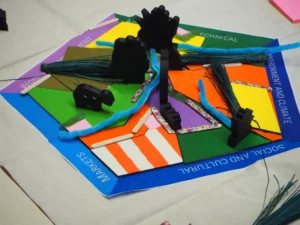
- Scenario development via participatory workshops based on serious games.
- Scenario assessment via Geographical Information Systems (GIS) and ecosystems services modelling.
Timing of the project
The project runs for a period of 3.5 years spanning from March 2023 to June 2026.
ISARA project team
Ioanna Mouratiadou (LER), Benoit Sarrazin (AGE), Abir Khribich (LER), Aurélie Ferrer (AGE), Anthony Roume (AGE), Jacques Aristide Perrin (LER)
Project partners
Leibniz Centre for Agricultural Landscape Research (ZALF), Scotland’s Rural College (SRUC), Institute of Soil Science and Plant Cultivation (IUNG), Université Grenoble Alpes, Juchowo Projekt Wiejski
Ressources and publications
Project website: https://clear.zalf.de/en/