
SEPURE project aims to develop new fish farming practices that will enhance the sustainability of pond aquaculture systems. The project is based on a co-construction approach with stakeholders, with the aim of developing and implementing new fish stocking strategies.
The project covers mainland France, with experimental sites located in four territories known for their fishpond systems (Dombes, Lorraine, Brenne, Sologne).

Funders : European Fund for Aquaculture (FEAMP) and France Agrimer
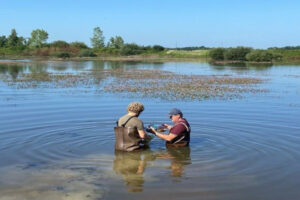
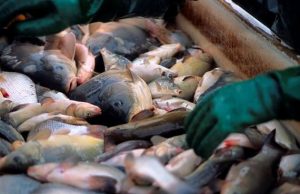
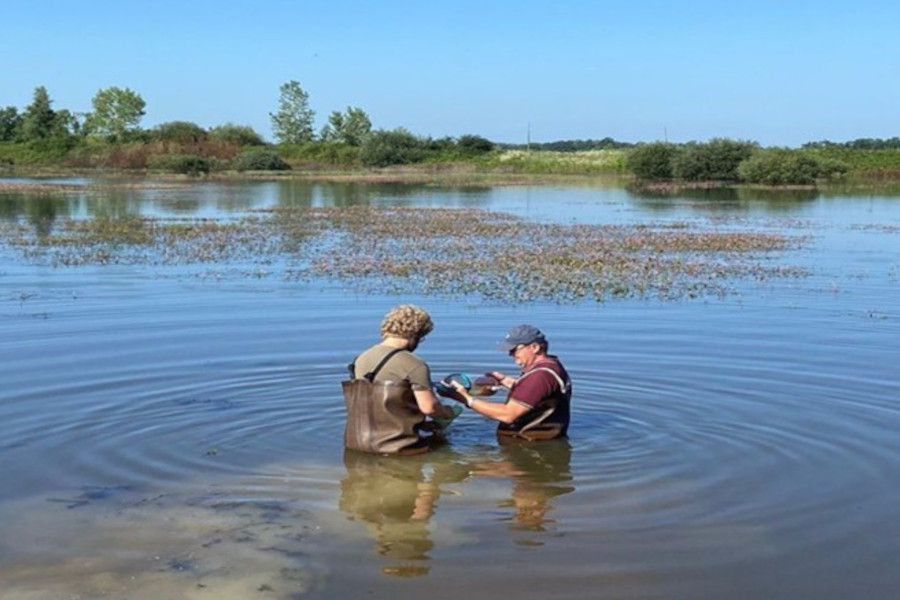
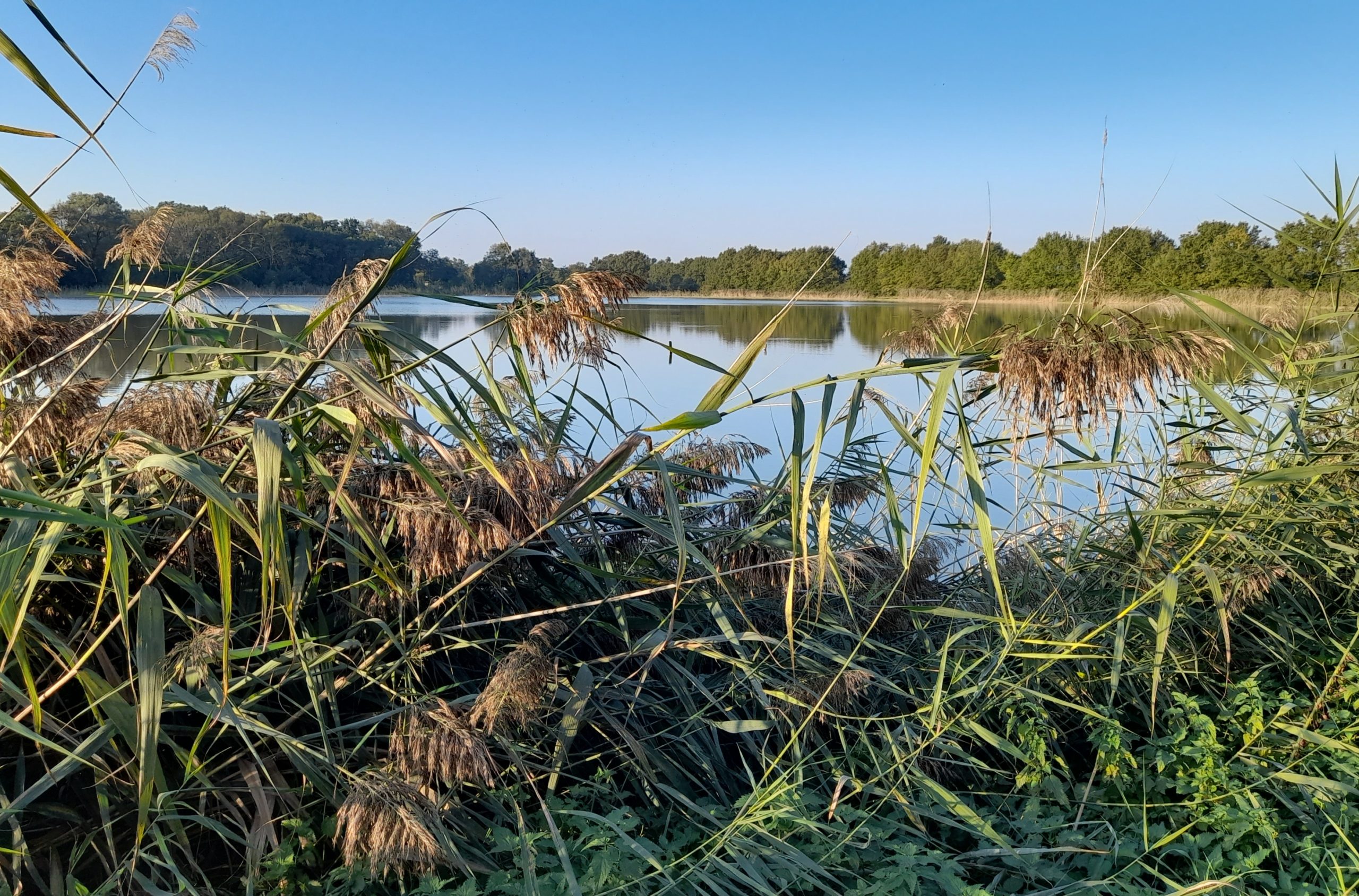
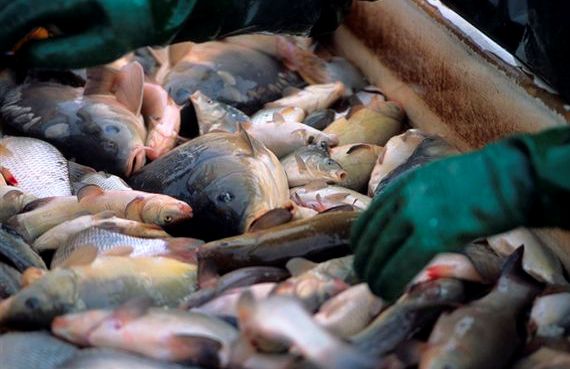
France has the largest potential pond surface area in Europe, which could meet the growing demand for aquatic products. Ponds also provide a large number of ecosystem services, such as food production (fish farming in particular), hydrological regulation, pollution purification, biodiversity support, etc. In France, ponds were mainly used for fish production and biodiversity conservation. Unfortunately, the use of ponds is declining due to their lack of profitability and the low attractiveness of their fish production. This decline in fish farming has a direct negative impact on the maintenance of these aquatic ecosystems in the landscape and the conservation of associated biodiversity. Based on these observations, the aim of this project is to propose new pond fish farming practices will draw on the entire system and its diversity to produce in a more sustainable way.
Project objectives
This project aims to develop new fish farming practices that will enhance the sustainability of pond aquaculture systems. The project is based on a co-construction approach with stakeholders, with the aim of developing and implementing new fish stocking strategies.Fish production is based on polyculture in the same aquatic environment, with species that are no longer sufficiently resilient to the impacts of climate change. We therefore need to define and experiment with new combination of fish species that are better adapted to current conditions. This could involve integrating new species, such assturgeon, black-bass, grass carp or innovative assemblages, such asblack-bass-roach/rudd-tench, without carp.
The project also takes into account the economic impact of the innovations generated, by carrying out a cost-benefit analysis. The environmental issue is at the heart of this project, with a detailed analysis of the mechanisms at play, both on a local scale, taking into account pond emissions, and on a more global scale, using environmental indicators such as the climate change indicator proposed by LCA (Life Cycle Assessment) methods.
On the scientific front, a number of elements are expected:
- A better understanding of interactions between fish species, invertebrates and plants.
- A better understanding of the interactions between pond farming and the surrounding natural environment.
- The development of modelling approaches adapted to the representation of pond functioning.
- The implementation of operational models designed to optimize stocking.
The aim of this work is to enrich knowledge and produce operational tools for fish farmers’ technical decision-making.
Ponds undergo constant biological and physico-chemical evolution. Knowing the equilibrium point of each pond, i.e. the state where no risk is taken either for fish production or for the degradation of biodiversity, is an asset. The ideal trajectory of each pond can be defined, and it is thus possible to define the appropriate fish stocking to facilitate pond management in the global sense of the term.
Materials and methods
Four successive activities were planned:
- A survey phase and co-design workshops with professionals aimed at adapting their production itinerary in terms of inputs and stocked fish species. The aim was to optimize their economic results while maintaining a resolutely agroecological approach (low densities, biodiversity conservation).
- An analysis of the coherence of the hypotheses adopted (fish stocking scenarios and management practices) in small experimental ponds.
- A field transfer phase, applying four main fish stocking scenarios and studying different indicators: ecosystem services rendered (production, biodiversity conservation, maintaining water in territories, etc.), LCA (Life Cycle Assessment) balance of fish produced, economic balance of fish farming activity.
- A modelling phase based on the functioning of studied in situ ecosystems: development of a fish productivity model based on available natural resources (e.g. algae, plants and invertebrate zooplankton) to determine the necessary supplementary feeding quantities and periods.
Main results
Scenario assessment: some fish stocking scenarios are promising, bringing added economic value but also an impact on biodiversity. For example, a scenario without carp (the flagship species of pond fish farming), but with a low-density mix of high value-added species, could help conserve biodiversity. Another scenario based on the addition of a new species (the grass carp for example) to the usual mix (carp/roach/tench/carnivorous fish) has virtues in terms of ecological and technico-economic performance, as the grass carp a priori enables greater recycling of organic matter in the pond.
LCA: analysis of LCA balances proves that fish farming on ponds, based on locally produced species and inputs, delivers really interesting results, with better LCA performance than most other types of fish farming systems.
Ecosystem services: analysis of the services provided by ponds in agricultural areas confirms their multifunctionality, particularly at the scale of pond landscapes. Indeed, on a territorial scale, a pond landscape always fulfils at least eight important functions: fish production; water retention to limit flooding; improvement of water quality through the absorption of pollutants (particularly phytosanitary residues); conservation of biodiversity; support for the education of young people; providing a place for inhabitants to have physical and psychological experiences; supporting pollinating species; and maintaining options for the territory’s future (thanks to the presence of surface water).
Modelling: a functional pond model has been finalized. It incorporates all the data accumulated during the program. Its effectiveness will be improved as feedback is received from field experiments planned for several projects.
A book based on the results of the program, published by QUAE, is planned for the end of 2026.
The redefinition of more agroecological farming models is necessary to respond to consumer trends showing a growing demand for aquatic products, as well as local and natural products. Various issues are at stake for these systems (Fig. 1): they must be productive to generate sufficient income; robust and resilient, i.e. maintain sufficient levels of productivity despite changing contexts (climatic, economic…); environmentally friendly in the sense of low impact on the natural environment; have “nature” value in the sense of biodiversity and landscape, and cultural value, in the sense of heritage, educational and artistic value; and use resources in limited quantities, preferably of natural and local origin (Aubin et al., 2017).
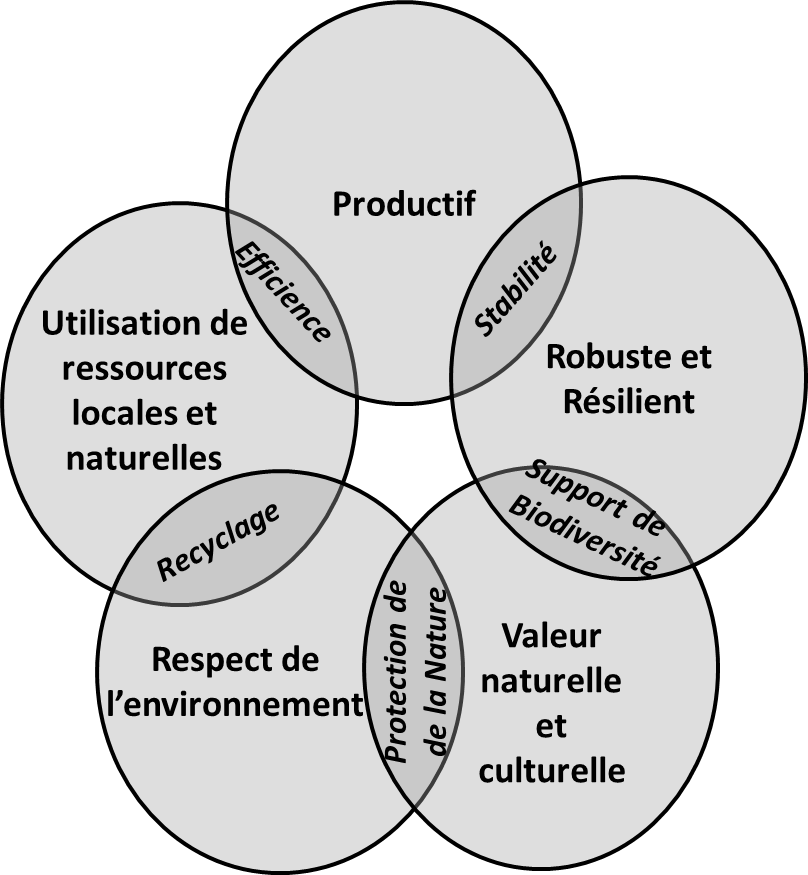
Principes pour une gestion agroécologique des étangs. D’après Aubin et al. (2017)
The association of fish species in ponds has been built up empirically (based solely on experience and observation, not on theory or scientific analysis) over centuries. New knowledge and new modelling approaches mean that current practices can be revisited and developed with the dual aim of combining productivity and respect for the environment, including the biodiversity dimension.
The theme of ecosystem services is a new way of looking at the interactions between an agro-ecosystem and the social sphere, by defining and measuring the services that this system provides to humans. It is an anthropocentric, utilitarian approach, but one that makes it possible to represent the multiple dimensions of an agro-ecosystem’s performance.
ISARA project team
Joël Robin, Léo Girard, Mathieu Guérin, Soraya ROUIFED from the Aquaculture team within the Agroecology and Environment research unit.
Project partners
INRAE Rennes (UMR SAS), University of Nancy (USC INRAE L2A), ITAVI, Agrocampus Ouest and University of Rennes 1.
Ressources and publications
Aubin Joël, Robin Joël, Wezel Alexander, Thomas Marielle. Agroecological Management in Fish Pond Systems. 2017. https://isara.hal.science/hal-03672954v1
Wezel Alexander. Agroecological practices for sustainable agriculture: principles, applications, and making the transition, World Scientific, pp.355-394, 2017, 978-1-78634-305-5
Posters de présentation du projet : https://isara.hal.science/hal-04150723