
The main objectives of this project are:
- To monitor nitrogen dynamics in different cropping systems in six AACs in the watershed.
- To evaluate the relevance of residual nitrogen at the start of drainage (RDD) as an environmental indicator for estimating the risks of nitrate leaching.
- To hold consultation workshops on the implementation of agricultural practices aimed at reducing the risks of nitrogen pollution.
Funder: Agence de l’eau Rhône Méditerranée Corse (AERMC) and Compagnie nationale du Rhône (CNR)
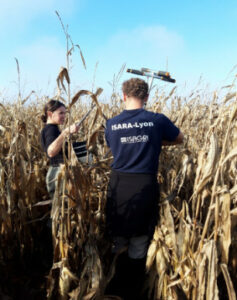
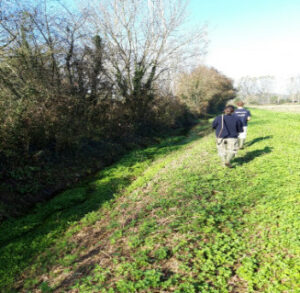
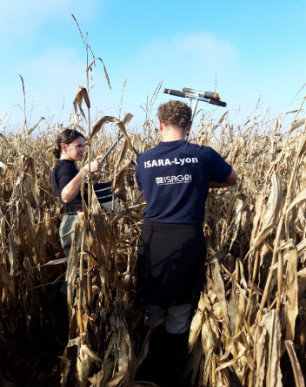
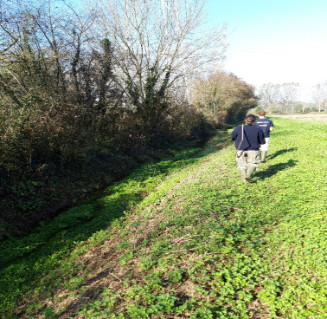
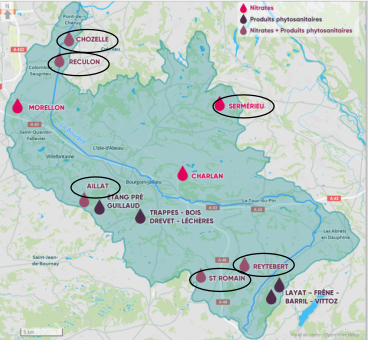
The Bourbre watershed, located east of Lyon, has abundant drinking water resources, but these are highly sensitive to pollution. Of the 11 water catchments in this watershed, classified as priority areas by the Water Agency, eight are classified as such based on the parameters “nitrates” or “nitrates + phytosanitary products.” Stakeholders in the Bourbre watershed have been concerned about the issue of diffuse pollution for many years. In order to limit nitrogen pollution in the environment, nitrogen losses are studied in the area using indicators (in particular, residual nitrogen at the start of drainage). To this end, the scientific teams at ISARA were approached to assist in the implementation of a study and monitoring methodology in the designated area, with a particular focus on the six priority drinking water catchments that were identified as being of concern with regard to nitrates.
The present project is designed to assess the impact of agriculture on the quality of groundwater suitable for human consumption. The work to be conducted is expected to facilitate a more profound comprehension of the nitrogen dynamics within the specified soil and climate context. This enhanced understanding will serve as a foundation for the estimation of losses from hydrosystems (nitrate leaching) and the atmosphere (ammonia volatilisation and nitrous oxide denitrification).
As a follow-up to these monitoring activities, analysis of nitrogen residues in the soil are carried out in different cropping systems. The aim of this study is twofold: firstly, to validate the relevance of these measurements as an environmental indicator, and secondly, to provide analysis tools for farmers and other stakeholders in the region. The dissemination of solutions and results is to be achieved through workshops and communications during technical and steering committee meetings on water catchments.
In each water catchment area, a specific action program has been developed with farmers and agricultural partners to implement agricultural practices aimed at reducing inputs (fertilizers and plant protection products). Each action encompasses a wide range of activities that the stakeholders concerned can implement, including: the establishment of diversified cover crops, legume-based mixed crops, the use of decision support tools (DSTs), etc.
The ISARA team is interested in establishing indicators aimed at ‘results-based objectives’, as opposed to the measures usually implemented in agriculture, which are based on means-based objectives concerning production practices (e.g., establishing plant cover or limiting fertilization). This ‘results-based’ approach aims to change agricultural practices in order to reduce nitrate leaching into raw water from catchments in the watershed.
etapes du projet
Study area
A network of reference farms, distributed across six catchment areas, will be subject to a three-year monitoring program. The objective of this program is to establish threshold values for residual levels at the initiation of drainage, with the overarching aim of ensuring the preservation of the quality of raw water in the catchments.
For this project, at least three cropping systems will be monitored annually in each catchment, for a total of 18 CS among volunteer farmers. The purpose of this reference network is to provide a better understanding of multi-year nitrogen dynamics within the BV.
Monitoring methods
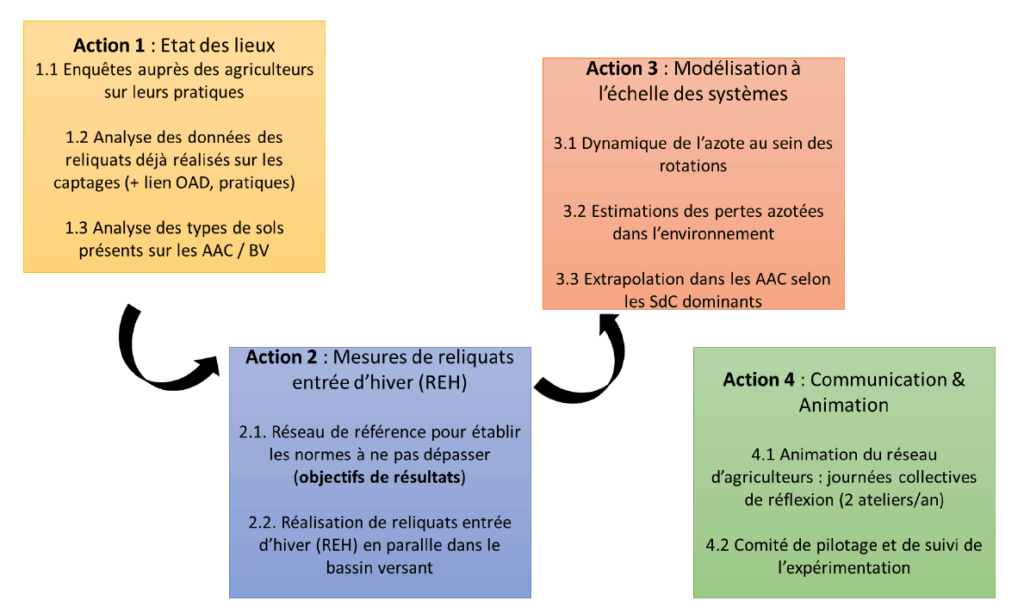
The project will be rolled out through the following four actions:
- Action 1: Review of farmers’ practices
- Action 2: Measurement of nitrogen residues at the start of drainage
- Action 3: System-scale modeling
- Action 4: Communication & coordination
Regarding action 2: the experimental plots must implement “good agricultural practices” (i.e., compliance with regulations and agronomic advice). For this reference network, 87 plots are being monitored for the six catchment areas concerned.
Indicators selected
At this stage, the team has defined the indicators are to be monitored during the measurement phase:
- Agricultural practices: mineral and/or organic fertilization, intercropping management
- Groundwater and surface water quality: nitrate concentrations.
- Nitrogen dynamics: mineral nitrogen residues in the soil at the start of the drainage period (RDD), residues at the end of winter (RSH), apparent nitrogen balance at farm level (an apparent balance corresponds to the difference between inputs and outputs). Modeling will be used to estimate nitrogen losses to the environment (volatilization, denitrification, leaching).
- Adherence to the approach: proportion of farmers and UAA (Utilized Agricultural Area) involved in the experiment, number of farmers participating in training/awareness days.
Project schedule
Starting in early September 2023, the project is planned to run for a period of five years (ending in late 2027): During this period, three years of measurements and two years of coordination and communication are planned.
Performance objectives
The potential leached nitrogen measurements obtained via the reference network will enable estimates to be made of the quantities of potentially leachable nitrogen according to the type of crop planted and the type of soil.
Subsequently, drainage water depths (corresponding to the amount of water that will infiltrate beyond the root zone into the water table during the drainage period: rainy winter period) will be estimated according to soil types and climatic years using modeling. Finally, all of these elements will make it possible to estimate whether the agricultural practices implemented are in line with the objectives of preserving raw water from catchments.
In addition, mapping of nitrogen pressures from catchment areas will make it possible to identify whether the crop rotations in place present a risk in terms of nitrogen pressure on water resources.
The Nitrates Directive, adopted in 1991 at European Union level, aims to reduce water pollution caused or induced by nitrates from agricultural sources. It thus contributes to the prevention of new pollution caused by nitrates and eutrophication by setting quantitative and qualitative objectives related to water quality. (https://www.bretagne.developpement-durable.gouv.fr/IMG/pdf/guide_par6.pdf).
About nitrogen losses in the environment
During its cycle, nitrogen can be released into the environment through three main pathways:
- Volatilization: This phenomenon is analogous to the loss of nitrogen, which occurs as a result of the volatilisation of ammonia into the atmosphere subsequent to the application of mineral fertilisers. This process entails the passage of the ammonium ion (NH4+) into the gas phase, wherein it exists as ammonia (NH3). The volatilisation of ammonia is triggered by the addition of nitrogenous products containing the ammonium ion or its precursor, urea.
- Denitrification: The conversion of nitrogen bound in nitrate into nitrous oxide (N2O) by certain bacteria, known as denitrifying bacteria.
- Leaching: This involves the extraction of soluble molecules by a solvent. In soil, it corresponds to the vertical movement of mobile water and its solutes through the soil profile beyond the reach of roots, to the water table or drains. Most of the leached nitrogen is in the form of NO3- which is highly mobile and soluble in water.
Residual nitrogen at the start of drainage (RDD)?
This is an environmental indicator of nitrogen pressure on groundwater in different cropping systems and in different soil and climate contexts. Combined with modeling, it will enable the estimation of nitrate losses that can be found in drainage channels. Thus, the nitrogen residue at the start of drainage provides information on the risk of nitrogen leaching during the winter.
« This project is based on approach combining research and direct implementation at the territorial scale. The goal is to implement indicators through workshops with farmers and other stakeholders. These indicators will then be used to adapt practices to the desired objectives. »
Marie BENOIT, lecturer and researcher, CLAS- ISARA
ISARA project team
Marie Benoit, Adeline Cadiergues, Mathieu Rouge, Benoit Sarrazin etJean-François Vian.
Partners
Établissement Public d’Aménagement et de Gestion des Eaux (EPAGE) de la Bourbre, Agricultural Chamber of Isère (CA38) and farmers.
Resources and publications
Animated film “Priority catchments, tools for water quality”
EPAGE de la Bourbre website – Les captages : https://epagebourbre.fr/fr/rb/484707/qualite-des-eaux-les-captages
BENOIT, Marie, 2023. Description du projet, Expérimentation de gestion des nitrates par des objectifs de résultats : InnovAzote. 2023.
BENOIT, Marie, 2015. Les fuites d’azote en grandes cultures céréalières : Lixiviation et émissions atmosphériques dans des systèmes biologiques et conventionnels du bassin de la Seine (France). [en ligne]. 18 juin 2015. Disponible à l’adresse : https://theses.hal.science/tel-01165033
DREAL BRETAGNE, 2019. Directive nitrates – 6ème programme d’actions en Bretagne. [en ligne]. 31 mars 2019. [Consulté le 17 avril 2023]. Disponible à l’adresse : https://www.bretagne.developpement-durable.gouv.fr/IMG/pdf/guide_par6.pdf